




Let talk follow your way!
Best price High quality Quick & efficient
Let talk follow your way!
Best price High quality Quick & efficient
Painted walls do a lot of work in a home. They brighten rooms, tie a space together, and help your interior feel fresh and looked after. The trouble is, they also catch fingerprints, scuffs, cooking grease, dust, pen marks, and all the other everyday mess that builds up over time. If you have kids at home, white walls, or high-traffic spaces, you will know how quickly clean paint can stop looking clean.
At Pro Fixing®, we spend a lot of time helping clients get walls looking sharp, whether that means new paintwork, surface prep, or repairs before repainting. Our Auckland team handles interior and exterior painting, along with plastering and GIB® stopping, so we see firsthand what helps painted walls last and what tends to damage them.
If you are wondering how to clean painted walls without removing paint, the main rule is simple: start gently, test first, and match the cleaning method to the type of mark. Here are five practical ways we recommend.
Before you reach for water or any wall cleaner, remove loose dust first. This is one of the easiest mistakes people skip.
A microfibre cloth, soft duster, or vacuum with a brush attachment works well for this. Dust tends to cling to walls more than people realise, especially near skirting boards, corners, light switches, and ceilings. If you wash painted walls without dusting first, you can end up dragging grime around and creating streaks.
This step is especially important if you are trying to clean white walls or matt-painted walls. Dry dusting first gives you a clearer view of what is actual staining and what is just surface dust.
If your walls still look tired after a proper clean, it may be a sign the finish itself is worn rather than dirty. That is when professional painting contractors in Auckland can make more difference than another round of scrubbing.
For most painted walls, the best way to clean them is still the simplest. Warm water and a mild detergent are usually enough for everyday marks, light grime, and general wall washing.
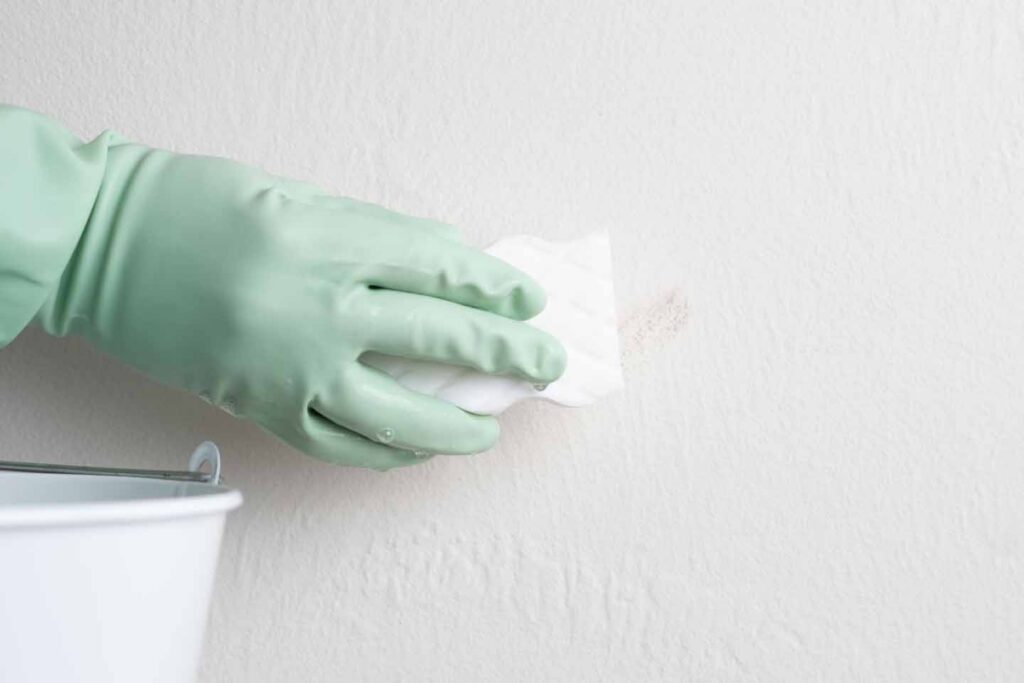
Mix a small amount of dishwashing liquid or gentle soap into warm water. Dip in a soft sponge or microfibre cloth, wring it out well, then wipe the wall lightly. Do not soak the surface. Too much water can damage paint, especially if the wall has an older finish or the paint has low washability.
When cleaning painted walls, work from top to bottom in sections. That helps reduce runs and streaks. Then wipe the area again with a clean damp cloth to remove residue, and let it air dry.
This approach is often the best cleaner for painted walls because it is safe, cheap, and easy to control. It is also a good option if you are trying to clean painted walls without streaks.
If mild soapy water does not lift the mark, a diluted white vinegar mix can help. This can be useful for light wall stains, sticky residue, and some grime that has built up over time.
Mix equal parts white vinegar and water in a bowl or spray bottle, then test a small hidden spot first. If the paint responds well, lightly apply the solution to the stained area with a soft cloth. Let it sit briefly, then wipe gently.
Vinegar on painted walls can work well, but it is not something I recommend using heavily or on every finish. Some paints, especially flatter finishes or more delicate coatings, can mark if you get too aggressive. Always test first and avoid scrubbing hard.
For people searching for how to remove wall stains without removing paint, this is often the next step after soapy water. It is also a practical DIY wall cleaning solution to keep on hand for spot cleaning.
Kitchen walls are a different story. Grease, steam, food splashes, and airborne residue build up faster there than in almost any other room. In these spaces, a mild degreaser may be the best wall stain remover, especially around cooktops, splashback zones, and dining areas.
The key is using the right product and not overdoing it. Some degreasers are too harsh for painted walls, particularly if the paint is matt or if the finish has started to age. Read the label, dilute if needed, and test first.
Apply the cleaner to a cloth rather than spraying heavily onto the wall. Wipe gently, then rinse with clean water and dry with a soft cloth. This is often the best way to clean walls in a house where grease is the real issue rather than dust or fingerprints.
If stains have soaked through the coating or if the paint is breaking down, cleaning alone may not solve it. In those cases, it can make more sense to repair the surface, re-stop any damaged areas, and repaint properly with a more washable finish. Our GIB® stopping specialists in Auckland and interior plastering team in Auckland often help get walls ready for that kind of refresh.
When basic wall washing is not enough, sugar soap or castile soap can be a strong next option. These are popular wall cleaner choices because they can cut through grime without being as aggressive as some chemical cleaners.
Castile soap is especially useful on washable painted walls with satin or glossier finishes. Sugar soap is commonly used when cleaning walls before painting, but it can also help remove stubborn buildup, fingerprints, and general dirt.
If you are cleaning marks off painted walls, use a soft cloth or sponge and avoid abrasive pads. Harsh scrubbing is what usually damages the finish, not the cleaner itself. This matters even more on white walls, where overworking one patch can leave a shiny or dull spot that stands out more than the original mark.
For a related read, our blog on why a qualified painter is essential for a professional finish in Auckland homes explains why the type of paint and prep underneath the surface can make such a difference to maintenance later on.
Sometimes the issue is not dirt. It is damaged paint, poor prep, moisture staining, or an uneven surface that is holding onto marks.
If you are constantly trying to clean wall stains and the marks keep coming back, it may be time to stop washing and look at the wall itself. Kitchens, hallways, kids’ bedrooms, rentals, and stairwells often reach that point sooner than people expect.
A quality repaint with the right washable coating can make future maintenance much easier. The same goes for walls with dents, patched areas, or poor stopping. There is no perfect wall cleaner for a surface that needs repair first.
The best way to clean painted walls is to start gently and only move to stronger options when needed. Dry dusting, mild soapy water, vinegar for light stains, degreaser for grease, and sugar soap or castile soap for tougher marks will cover most situations.
The bigger goal is preserving the paint while lifting the stain. That is why soft cloths, spot testing, and avoiding over-wetting matter so much. If you are dealing with white walls, matt finishes, or older paint, those small details make all the difference.
And if your walls are past the point where cleaning will fix them, that is where we can help. At Pro Fixing®, we handle interior painting in Auckland along with the prep work that gives you a better result from the start. A well-finished wall is easier to live with, easier to maintain, and a lot easier to keep looking clean.













We have a large team of 86 highly qualified GIB® Fixers, Stoppers & Painters in Auckland, Wellington, Hamilton with more than 10 years experience. We are prepared for all jobs from residential to large scale commercial sites…Read More
Mon to Fri: 7AM - 5PM
Saturday: 8AM - 4PM
Sunday: Closed