



Let talk follow your way!
Best price High quality Quick & efficient
Let talk follow your way!
Best price High quality Quick & efficient
Three different trades turn a timber frame into a wall you can paint, and they happen in a fixed order. Get the order or the handover wrong and you end up paying twice. I run Pro Fixing®, and in fifteen years across Auckland, Hamilton and Wellington the question we get asked most often is some version of “who does what, and when?” Builders know the answer. Homeowners almost never do, and it costs them on quotes, on programme and on finish quality. Here is the whole sequence, start to paint.
GIB® is a brand of plasterboard made by Winstone Wallboards, so the name gets used the way people say Vivid or Jandals. The board is a gypsum core faced with paper liner, made in a range of specifications for different jobs. When we mean the material generally we say plasterboard, and when we mean the product we say GIB®. If you want the full distinction, we cover it in our guide to whether GIB is the same as plasterboard.
Sheets are commonly 2400 x 1200mm in 10mm or 13mm thickness, though longer and wider sheets get used to cut down on joints.
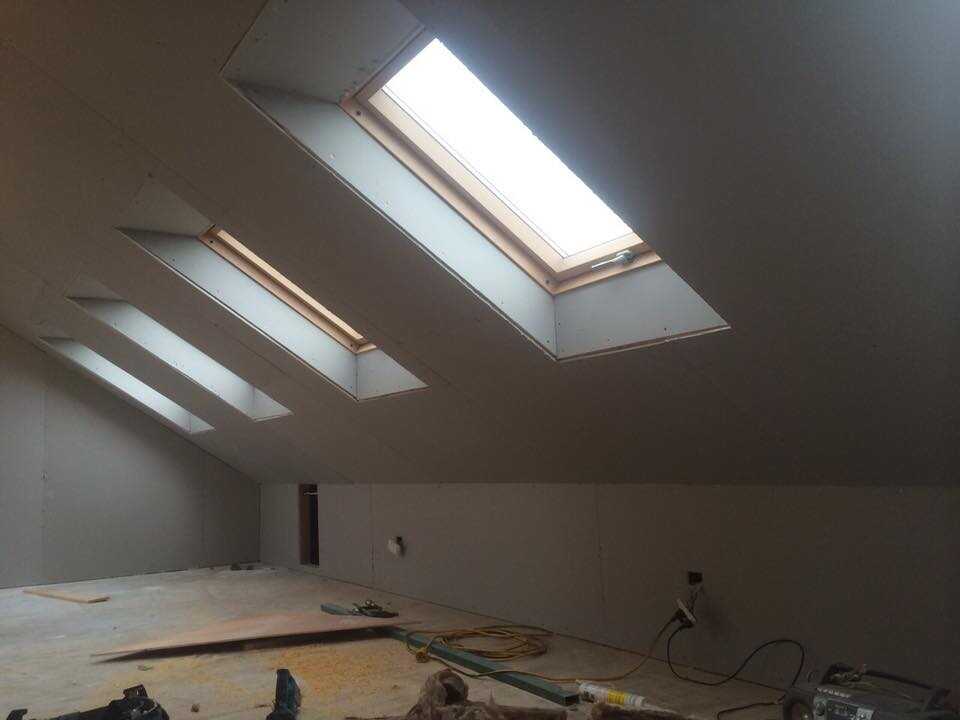
Fixing is the mechanical job. We cut the sheets, fit them to the framing and fasten them off with adhesive daubs and screws. It is the stage that decides whether your walls are straight, and no amount of good stopping later can rescue a badly fixed wall.
Done properly it involves a few things most people never see:
Ceilings get fixed before walls. That order is deliberate, because the wall sheets then support the perimeter of the ceiling. Our GIB® fixing Auckland crews work to the same sequence on every job, whether it is one room or an apartment block.
Board selection happens before the truck arrives, and it is worth understanding because it affects both price and performance.
Specialty boards cost more and take longer to fix, so a board schedule that is right first time saves a variation later. Some wet areas are better lined in villaboard than plasterboard, and we will tell you when that is the case.
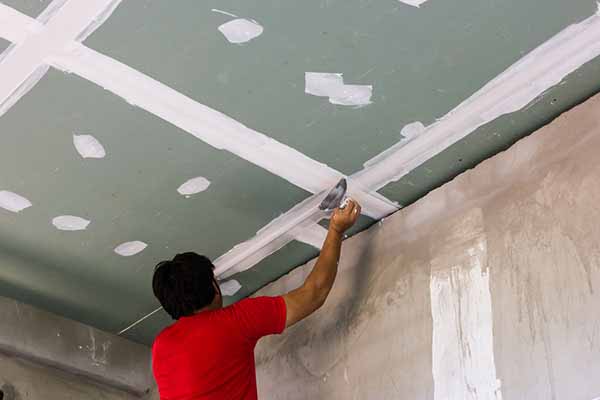
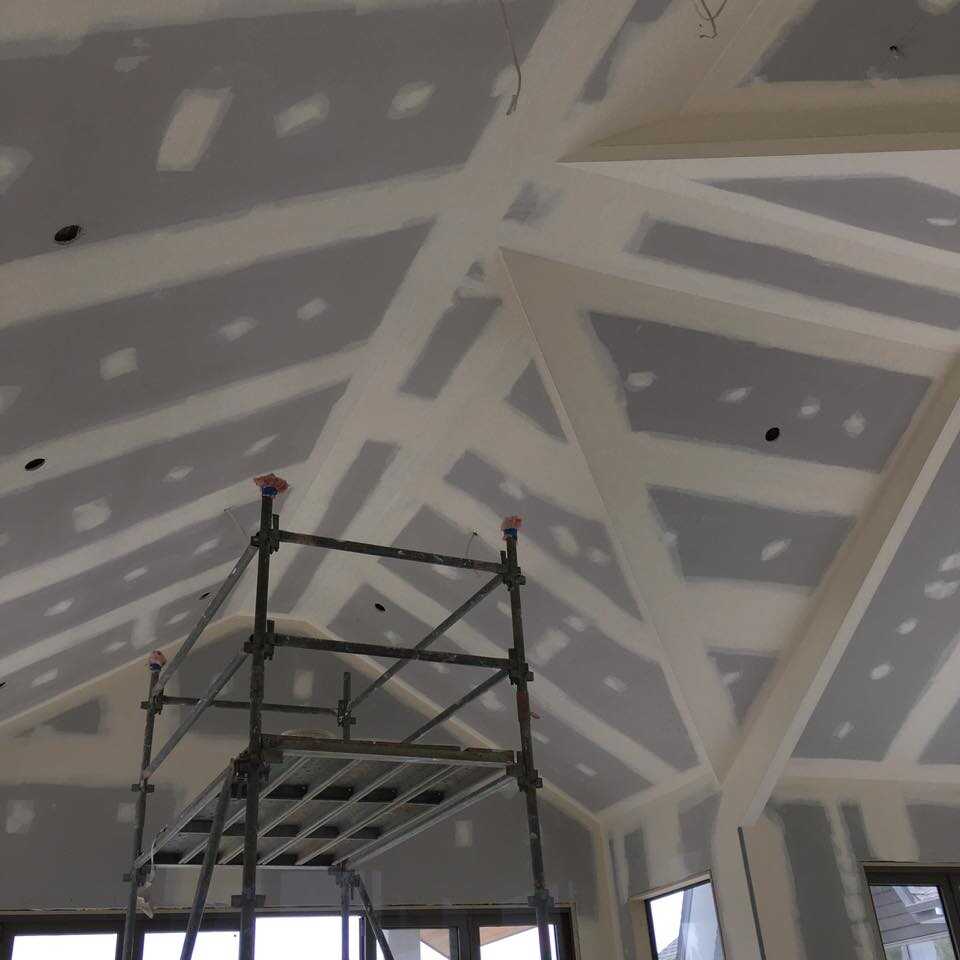
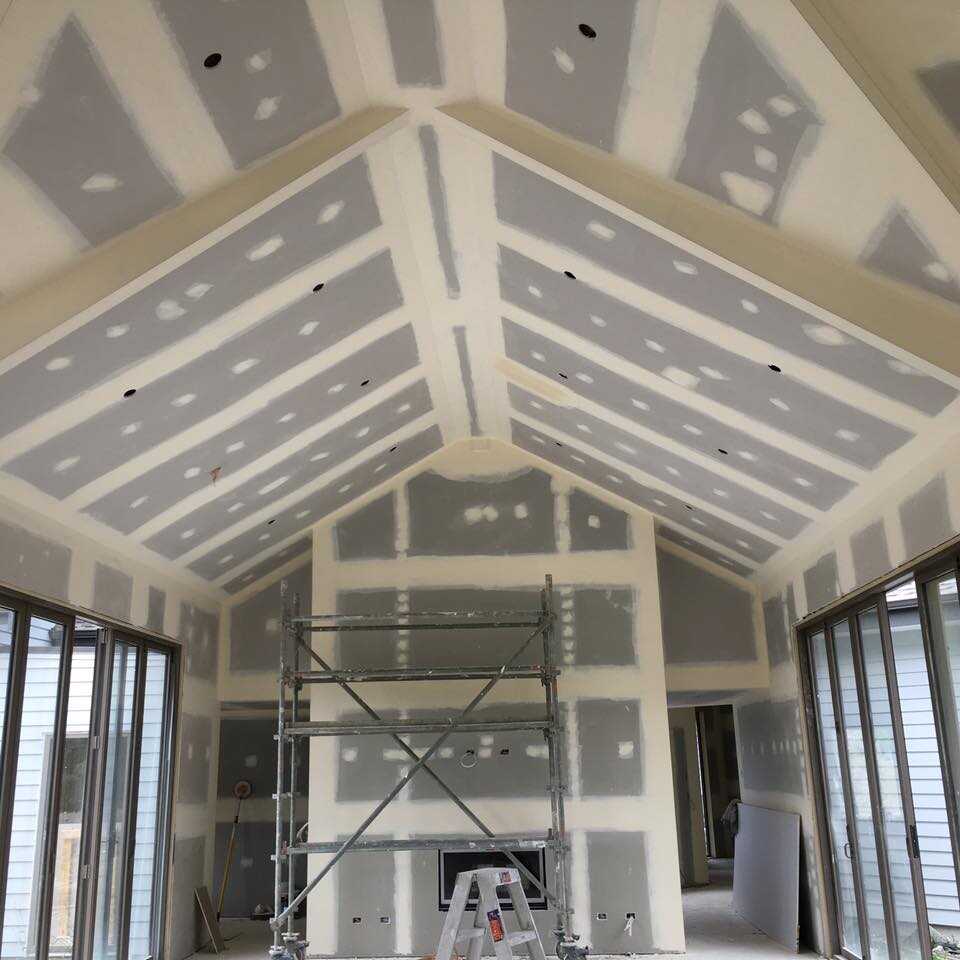
Stopping is the finishing job, and it is a separate trade with separate tools and a separate skill set. Once the board is up, the joints, internal and external corners and every screw head need to disappear.
The sequence runs roughly like this. Paper tape or RocTape® is bedded into a base coat of compound over each joint. A second coat goes on wider, around 170mm. A finishing coat goes wider again, at least 250mm over a tapered joint and around 500mm over a butt joint, feathered out so the build sits under 2mm across the joint. Then it is sanded, checked under a light, and touched up.
That is a Level 4 finish, which is the standard for most New Zealand homes. Level 5 adds back blocking of all joints and a skim of compound over the entire surface, and it gets specified where gloss or dark paint is used, or where critical lighting from windows and downlights rakes across a wall and shows up every flaw. Our GIB® stopping Auckland team works to whichever level the job is specified at, and we carry a two year workmanship guarantee on plasterboard finish based on the Master Builder defect schedule.
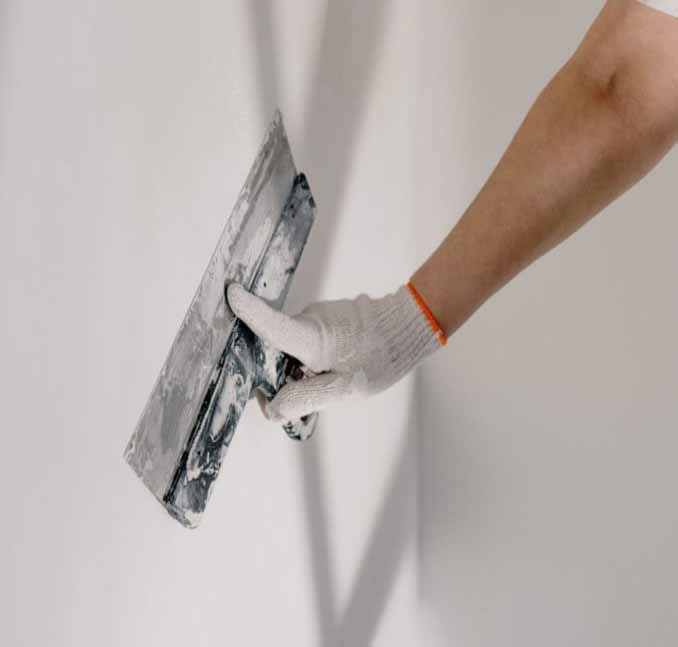
Plastering is the broad trade, and GIB® stopping is one part of it. A plasterer may work on concrete, brick, block or solid substrates using cement or lime based products, none of which involve plasterboard at all.
In a standard NZ home lined in GIB®, what you actually need is stopping. Where a renovation exposes old concrete, block walls or damaged solid surfaces, interior plastering is the right call. We go deeper on the distinction in our comparison of GIB stopping and plastering.
Most finish complaints we get called to inspect are handover problems rather than trade problems. A fixer leaves proud screws or a sheet that is slightly off the framing, the stopper covers it, and the paint reveals it. Or stopping dust is left on the surface and the sealer coat lifts.
Fixing and stopping with one team removes that gap, because the same project manager owns both stages and nobody gets to blame the trade before them. It also means the walls are ready when the painting contractors arrive, instead of the painter absorbing someone else’s patching.
Ask how many years the crew has been fixing and stopping, not how long the company name has existed. Ask whether they are licensed and insured. Ask what finish level the quote is priced at, because a Level 4 quote and a Level 5 quote are different jobs. Ask who sands, who cleans up and who handles the offcuts. Then look at recent work under natural light rather than at photos.
We run around 250 jobs a year with 86 qualified fixers, stoppers and painters across three regions, and a project manager on every job. Send us your plans and we will come back with a measured quote inside five days covering fixing, stopping or both, and tell you honestly which stages you actually need.
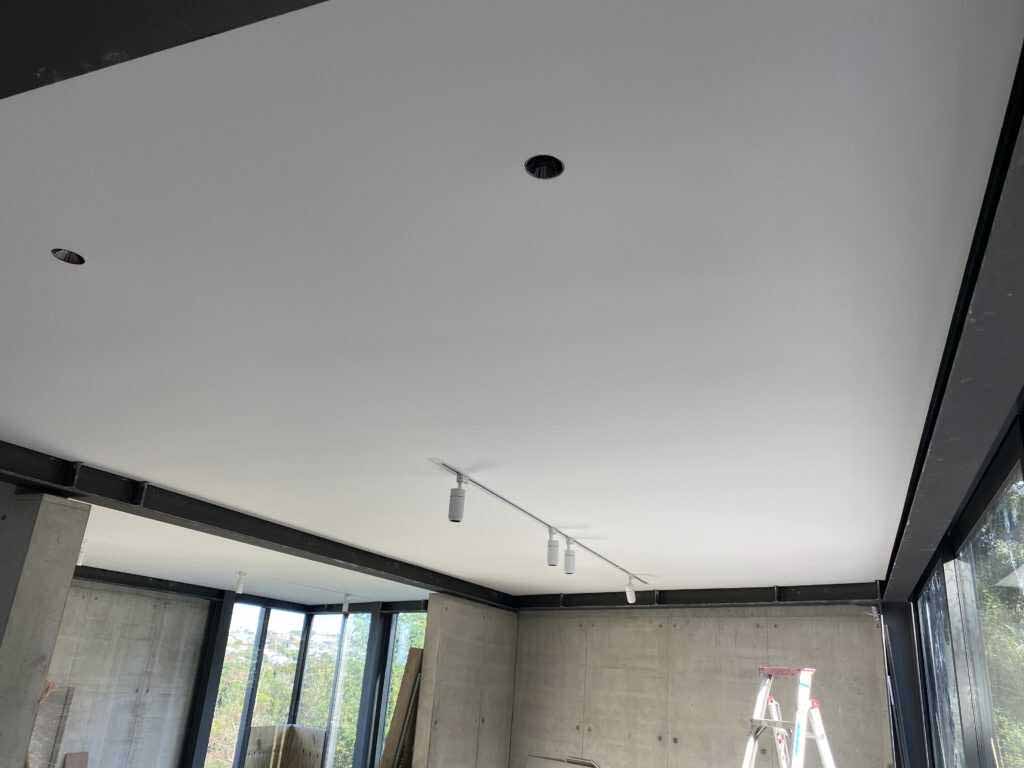













We have a large team of 86 highly qualified GIB® Fixers, Stoppers & Painters in Auckland, Wellington, Hamilton with more than 10 years experience. We are prepared for all jobs from residential to large scale commercial sites…Read More
Mon to Fri: 7AM - 5PM
Saturday: 8AM - 4PM
Sunday: Closed